October 15, 2021.
Saturday, 23 October 2021
review: Roger Taylor - "Outsider Tour" at Rock City in Nottingham
Sunday, 5 September 2021
Roger Taylor: "Fun in Space" / "Strange Frontier" analysis
I recently revisited Roger Taylor's first two solo albums. They are pieces of music history that have barely been spoken about since they came out, and this piece aims to rectify that at least a little bit.
Nobody gets out of here alive
Life in the future might never come to pass
You know good times are now
You and me have seen better times
Now we're on the borderline and I wish I wasn't here
Killing what they can't steal
Smile but we just don't feel
Listen to the rhythms of your soul
Listen to the rustling in the undergrowth
Follow in their footsteps to your goal
Like your mum and your dad
They're dying each day
Living a lie that's so sad

Given time hope springs eternal.
Time is on the run for sure
Friday, 2 April 2021
review: Yes - "The Ladder"
Rick Wakeman once referred to his good friend Jon Anderson as "the only guy I know trying to save this planet while living on another one."
The progressive rock band Yes has always had a rotating cast of characters. Wakeman doesn't play on this album, but he's the first to say Yes has always had great musicians in it. Whether or not he was just being diplomatic, he was right.
By the late nineties Anderson's iconic countertenor was full-on into new age philosophy, and amidst this collection of tracks it is inexplicably infectious, making for the most uplifting Yes album since 90125 (and to date).
The Ladder had four of the members from the lauded "classic" lineup—Anderson, guitarist Steve Howe, bassist Chris Squire, and drummer Alan White, augmented by multi-instrumentalist Billy Sherwood and keyboardist Igor Khoroshev (who was well appraised of the shoes he was filling).
Their creative peak was pretty well inarguably in the 1970s, and an unexpected second lease on life led to their commercial peak in the mid '80s. By the late '90s they were in a bit of a creative rut and joined forces with Canadian producer Bruce Fairbairn. Finding yourself aligned with the right set of ears at the right time to coach you through the process can make all the difference. By this time it was clear to anyone watching carefully enough that Canada had spawned more successful record producers per capita than any other nation on earth (Jack Richardson, Bob Ezrin, Daniel Lanois, Bob Rock, and David Foster for starters) so the odds were in Yes' favour that something great could happen.
This is the one latter day Yes album where their '70s compositional prowess blends with their '80s pop sensibility. The arrangements are thoughtful, the melody always comes first, and rarely are two choruses identical. And in an era where the idea of album sequencing was now mostly in the rearview mirror, it flows beautifully and cohesively from track to track. They even brought in a sideman, Randy Raine-Reusch, who played a whole score of ethnic instruments, bringing a welcome freshness to their sound which hadn't been fully realized for quite some time.
Yes is a vocally driven band, but usually not in the traditional sense. Anderson's vocal best functions as a fifth instrument and is not necessarily front and centre. His words are often merely an extension of the music, not the other way around. Even if you don't believe a single word he says on The Ladder, he offers it genuinely and gracefully, with authenticity and joy. You just can't help but want to be on whatever planet he's on.
And it's not just Anderson on the spiritual bent here—Fairbairn nicknamed Howe "Swami" for his role in the process. I'm often a cynic, increasingly hardened by the world, and this album makes me believe magic exists. When these two guys are fully congruent with one another they create magic every time.
Prog fans hailed the eponymous 10-minute opening track as a return to form, but just as much depth is found in the shorter tracks that follow.
"It Will Be A Good Day" sees many baroque-inspired key changes, similar to "And You And I." Anderson and Squire's voices blend together as well as ever, like Lennon and McCartney on "If I Fell."
The genre bending and upbeat "Lightning Strikes" is Yes' boldest move since they teamed up with the guys who wrote "Video Killed The Radio Star." The horn section is well-utilized, and the time signature changes galore never feel shoehorned or laboured, similar to what Rush achieved on "Limelight."
"Can I" is self parody at its finest, with the counterpoint and lyrics evoking "We Have Heaven" from Fragile. On first glance it's derivative, but Anderson takes it a step further, inventing a language long before Sigur Ros. I have such a soft spot for choral music—the same reason I love the title track off Drones by Muse.
On "Face To Face" Squire makes something as rudimentary as a descending major scale sound like you're hearing it for the first time. The Aretha-like backing vocals are not unlike "Houses Of The Holy" (the song, not the album).
Word painting is a musical technique that goes back to Handel, at least—"Ev'ry Valley" from the Messiah first comes to mind. At the end of Anderson's love song "If Only You Knew," on "when I was falling" the textural bit of steel guitar Howe adds literally sounds like something falling. Masterful.
"To Be Alive" is pop perfection. Once again the congruency of Anderson and Squire's voices are on full display in the second verse. Howe's only contribution is a bit of lap steel, and it's sublime—so exceptionally suited to the song that he plays it again like McCartney's solo on "Maybe I'm Amazed." Every note Howe plays on this album is purposeful, crafted with care. His parts are mostly ornamental, and this is not to their detriment. It is an hour-long clinic on how to play for the song, decorating only the spots that need it. This is what musical maturity sounds like.
Many of the songs have outros that are completely unrelated to the rest of it, as Fairbairn felt the ideas were too good to leave on the cutting room floor. And somehow it all works. The bit tagged onto the end of "Finally" has a Tales From Topographic Oceans feel to it. The intro unexpectedly recapitulating later in the song is marvellous as well.
The sudden entry of backing vocals in "The Messenger" is one of the most powerful moments in the entire Yes catalog. Even people who panned this album said they loved this track.
"New Language" is not dissimilar to "Close To The Edge" in that there's a lengthy instrumental intro that precedes the core of the song. The backing vocals in the pre-chorus evoke "Leave It" off 90125, and in the last chorus Squire's bass part moves up an octave. Tiny sprinkles like this are massively effective, as he manages to somehow elevate the track to an even higher place. It's classic Yes from here onward for the rest of the piece.
On "Nine Voices" Howe plays the same 12-string Portuguese guitar he'd played decades earlier on "I've Seen All Good People" and "Wonderous Stories." The "new language" lyrical theme is heard again, similar to "these days" showing up all over the album bearing that name by Bon Jovi (another underrated '90s album). It wouldn't surprise me if the overdubs totalled nine voices, because it wouldn't be Yes at their best if they didn't have that kind of attention to detail.
With this album a bunch of guys in their 50s shunned the idea of following timely trends, and in the post-grunge era they produced what should be hailed as a classic. It's an entirely different discussion why the business mechanisms that were needed to help achieve that didn't come to bat for them, but it's all moot now that you're reading this.
Give The Ladder a spin—you'll almost certainly be glad you did. It's one of the best rock albums this side of OK Computer.
Saturday, 2 February 2019
Dr. Brian May: polymath
This post on the wonders of the New Horizons mission is a two parter, with the first half being expertly done by my good pal and professional astronomer Ryan Marciniak. My part focuses on the path one of my favourite musicians underwent to end up on NASA's rolodex.
The link between music and astronomy begins over 200 years ago with William Herschel. Most famous for discovering Uranus and infrared radiation, he was also a composer. By the 20th century, Danish composer Hakon Borresen wrote a ballet about Tycho Brahe, and one of German composer Paul Hindemith's operas was based on Johannes Kepler. Polish composer Henrik Gorecki's second Symphony was entitled The Copernican. American composer Philip Glass wrote an album about Galileo, and later composed another opera on Kepler. Glass also wrote a piece about the constellation Orion.
One of the first rock bands to dive into astronomy was Rush, with the vividly detailed "Cygnus X-1" in 1977. About a decade later, Todd Rundgren wrote a beautiful and introspective piece called "Hawking." But the first rock musician to properly incorporate astronomy into music was Brian May of Queen. In 1975 he composed a piece for the band's A Night at the Opera album entitled "'39," which details an astronaut's journey as per the time dilation effect. The protagonist feels like he has traversed space for only a year, but to the people at home on Earth he has been gone for a hundred. May later revealed how it had another layer to it (unbeknownst even to him on a conscious level at first), about the contemplation of the changes that occur at home and within oneself when one leaves their roots in search of experiences and meaning in life.
May's career in astronomy actually began before Queen did, but he abandoned his Ph.D. studies in 1974 after the band found commercial success. He eventually finished his doctorate on the motions of interplanetary dust in 2007, a topic that had fallen out of fashion in the 1970s but gained a renewed interest as other habitable zone planets were being discovered. An asteroid was named "52665 Brianmay" in his honour the following year.
He is also a lifelong enthusiast of stereo photography, an art of 3D photo viewing that traces back to the 1840s. The premise is that two photos of the same object or scene taken at slightly different angles can pop out in 3D, either by crossing one's eyes or viewing the images through a stereoscope. Unbeknownst to millions of Queen fans for decades, May's [and bassist John Deacon's] love for stereoscopy graces the back cover of their debut album.
May's affinity for stereoscopy never waned. All those years of touring often saw him rummaging through the shops of the world in search of stereo cards, and his collection is apparently one of the finest in the world. He has since written or co-written numerous books on stereo photography, astronomy, music, or any combination thereof.
In 2013, Canadian astronaut Chris Hadfield sent May photos from the International Space Station, which he turned into stereos that he presented at the Starmus conference in Tenerife a year later. The conference was the Woodstock of science, with the added bonus of being able to meet your heroes without a backstage pass. Nobel Laureates, men who walked on the moon, and household names like Richard Dawkins and Neil deGrasse Tyson mingled with the rest of us. Stephen Hawking was the headliner, and one of the opening acts was Brian May.
I was there, in the middle of the oohs and aahs. At one point May stated how he would spend several days at the computer working on single images to maximize their 3D capabilities, to a standing ovation. In a seminar in which he had set the stage by explaining how the school system in his day taught him that it was impossible to be both a scientist and an artist, watching the scientific community embrace his unique blending of science and art a half century later, at a conference specifically designed to blend science with the arts, was nothing short of magical.
Aside from touring, Brian May's musical activities have mostly taken a back seat in recent years while he has pursued his other passions. He was most recently a scientific and musical contributor to the New Horizons mission. His first solo composition in nearly 20 years, entitled New Horizons, found one passion of his reigniting another.
He premiered the song at the NASA headquarters New Year's event immediately after counting down to 2019. His goal in writing it was not only to commemorate the mission, but also to celebrate our inherent inquisitive nature as a species. Days later he posted on his blog his own stereo pair of the first clear images of Ultima Thule, the furthest object we have ever travelled to.
It is of little coincidence that memes like this pop up, as people are now connecting the dots between his musical and academic pursuits:
Brian May has created a second career in exercising his star power to bring science and academia to the masses in an accessible way. He is a Renaissance man. I'd argue he is the Leonardo da Vinci of our time.
Who wants to live forever? Probably no-one.
But I wish he could.
Wednesday, 14 November 2018
"Bohemian Rhapsody" review (sort of)
Of course I'm flattered - because I've been absorbed in Queen's music and history for 25 years now, both professionally and for my personal delight, this has people thinking I'm qualified to give a more valid and pertinent review than most.
But that's the problem - I'm so intrinsically connected to this music and their story that I almost feel overqualified to provide an unbiased opinion. When you're this deep in it, you're usually one of two things: a sycophantic fan boy, or in a position of wanting to show respect and gratitude to the people who have basically provided you with a career. I'd like to think I'm somewhere in the middle, never wanting to pigeonhole myself into anything I can't safely crawl out of. But I'd say I'm closer to the latter.
Ultimately I don't feel any more qualified to review this film than anyone else, because I'm but one person in the grand scheme of things; art is designed for everyone, after all. The same way that everyone eats food, not just bourgeois chefs.
And this is perhaps disappointing for those who want to hear me say it was crap because of all the historical inaccuracies that undoubtedly would have had me wincing every 30 seconds.
Alas, that's not what happened. Far from it. I'd heard enough reaction from people who'd already seen it, so I reset my metric of expectation. If we've learned anything from previous music biopics, it's that Hollywood is all about entertainment, not accuracy. If you want accuracy, watch a documentary. So I went in expecting to be entertained and not much more. After all, understanding the intent of art is often paramount to appreciation of it.
As I sat down in my (strangely more comfortable than usual) cinema chair and was transported back to 1970, all kinds of feelings went through my head. My life insofar as my history of loving this band flashed before my eyes: hearing We Will Rock You for the first time on a cassette tape lent to me by my grade 6 music teacher, learning how to play it (and the rest of the Queen catalogue) on guitar at some point in the ensuing few years, meeting Brian May for the first time at an audition for the Queen musical (which I thankfully passed), launching a website about Queen's concert history, playing in my own Queen tribute band in a theatre for the first time, playing A Night At The Opera at the prestigious Massey Hall in Toronto, the countless wonderful people I've met as a result of all of this, and a whole lot other memories, both public and private, that I can't even begin to quantify.
And then I saw the characters who were overall very well cast (the guy playing Brian was uncanny). And those characters told a story. Not necessarily Queen's story exactly as it played out - but "a" story. It was largely accurate, with some fabrications, and some anachronisms to advance the story wherever necessary. And then there were those two or three scenes that even the most ardent experts on the band would say were complete fiction and never happened. But shift around the timeline a bit, and maybe that scene where Mercury is begging for his job back is more true than one may realize. The definitive Queen documentary called "Days Of Our Lives" came out in 2011, and there were plenty of stories told by Brian May and Roger Taylor that hadn't been previously told. Were those 35 year old stories untrue in 2010 just because they hadn't been told yet?
And of course there were plenty of omissions, but what can one possibly expect from a two hour movie? It will never be comprehensive.
I'd walked in thinking I wasn't the target audience. That the film was intended more for people who knew three Queen songs than for people like me. But by the end of the film, as I watched the triumphant Live Aid scene (which was brilliantly reproduced) with tears in my eyes, it dawned on me that tens of millions of people are now experiencing some semblance of the joy that this music has brought me over the past 25 years of my life.
My adolescent self was bullied incessantly for liking this band. And now 20 years later, they've never been bigger in my lifetime than they are right now. Teenage me and current me are pretty thrilled with the idea. It is a moment I will cherish.
Thursday, 2 August 2018
review: Jeff Beck at Budweiser Stage, Toronto
I saw Jeff Beck tonight. It was transcendental.
The evening began with sets by Ann Wilson of Heart and Paul Rodgers of Free/Bad Company. Both were brilliant, and showed no signs of slowing down in their late 60s. Rodgers finished his set proper with Rock 'n' Roll Fantasy, with the final words being the ad libbed "it's my dream". In that exact moment I realized how grateful we should all be that these legendary musicians are putting their bodies through hell for months at a time on the road so that we can be entertained for a couple hours, despite being past what the rest of us would reasonably consider to be retirement age.
Many of the pieces were different arrangements from what he had done on previous tours, like his encore of the Corpus Christi Carol, this time performed only with his cellist Vanessa Freebairn-Smith. The man is constantly innovating.
Like Frank Zappa, the guitar is an extension of his brain, and he never plays a piece the same way twice. Instead of using a pick, he oscillates between his thumb and index fingers. He has created a secret handshake on his instrument that is so distinctly him. His sound is as instantly recognizable as David Gilmour's or Brian May's. But to call him an innovative guitarist doesn't entirely capture his essence. He has carved his own brand of creative expression. He is without equal.
Stevie's Cause We've Ended as Lovers, one of Beck's signature pieces, was delivered with authority and grace, as was the set closer, A Day In The Life. The latter sees a fine balance of Beck's emotive and playful style, and the build to the final chord left the audience in great anticipation for the crashing finale.
Big name Toronto musicians like Kim Mitchell of Max Webster fame and Geddy Lee of Rush attended the show. Mike Turner, formerly of Our Lady Peace, summed up the show to me in two words:
"The. Master."
And when one's peers are that bold and conclusive, that says it all.
Saturday, 12 May 2018
Ten Canadian albums that most people under 50 do not know and should
#1 - Hope by Klaatu
#2 - The Langley Schools Music Project

This is a piece of art unlike any other. Recorded in 1976-77 but unreleased until 2001, this is an hour of music sung and performed by several groups of school children in British Columbia, although with a twist - it is not traditional children's music. The children and their teacher (who started the project) rejected the idea that kids' music should be perpetually happy and upbeat, as it didn't accurately reflect the range of emotion children feel. While there are some peppier numbers like Good Vibrations and Sweet Caroline, they balanced the scale by expressing equally genuine and universal feelings like loneliness and sadness. Pieces like God Only Knows, Space Oddity, The Long and Winding Road (sung solo by a 10 year old), and Calling Occupants of Interplanetary Craft (see: Klaatu above) are beautiful and sometimes challenging listens.
The kids play all the instruments too, and the songs carry vibes that range from Philip Glass to Phil Spektor to Gregorian Chant. I'm Into Something Good sounds more like gospel than a silly pop song.
Even in 2001, it took ten record labels for one to finally say yes to releasing this. That in itself is proof that we have such a long way to go in undercutting stigmas in our understanding of children (and ourselves). This music serves as a reminder that it is okay to express any feeling or idea, not just the ones that society or Facebook say are more worthy of air time than others.
Even if the technical execution isn't always perfect, this is one of the most genuine expressions of feelings through music you will ever experience.
#3 - Jaune by Jean-Pierre Ferland

While plenty of Canadians may not be in touch with their musical heritage, this cannot be said for Quebec and Newfoundland, who tend to wear their culture on their sleeve. While the rest of Canada is used to looking at magazine racks with mostly American content, in Quebec they have their movie stars and their music. And they have classic albums that they cherish like this one from 1970.
It is easily as good as anything the British or west coast folk movements came up with in the period. The sound is warm, the arrangements are beautifully crafted, and the influences and colours are many. It somehow manages to sound both of its time and like it was recorded yesterday.
"God Is An American" is satire at its finest (and decades before Bowie's "I'm Afraid Of Americans"). It's almost like it's Quebec's answer to Glenn Gould's "So You Want To Write A Fugue" - absolutely brilliant.
And if you're not sold yet - in 1971, John Lennon said this was North America's best album of the year.
And for all you prog heads - a young Tony Levin is on bass.
If Lake Louise and the Bay Of Fundy are what Canada looks like, then albums like this are what Canada sounds like.
#4 - The Goldberg Variations by Glenn Gould

Undoubtedly one of the most visionary and influential musicians ever to play an instrument, this is his definitive work. His original 1955 interpretation of these piano works by Bach are what put him on the map, but the 1981 version has a certain maturity and wisdom to it. His playful approach towards this musical scripture set him apart from his peers, and his iconic and subtle humming along (which no recording engineer could ever manage to remove) is not a detraction - it is all part of the charm. He was seen by many as an eccentric mad man, and I'm sure he wouldn't have resented that label. It takes a mad man to make 200 year old music completely new again.
This is one of the most important recordings of the last hundred years. And it is Canadian.
#5 - High Class In Borrowed Shoes by Max Webster

While virtually unknown outside of Canada, Max Webster were a massive force in their day. Led by Kim Mitchell, they were a sort of Canadian Frank Zappa, but more accessible. All their records went at least gold here, and at their peak they were regularly cited as being amongst the top few acts in the country.
Their 1977 sophomore effort is likely their finest. Their left of centre quirkiness (both musical and lyrical) defined them, and they created a sound entirely of their own with slick musicianship and hooks all over. No two consecutive tracks have the same vibe, yet it is a cohesive piece. Many of them remain radio classics, like the title track, Gravity, and Diamonds Diamonds. On The Road is perhaps the finest travelling musician song ever written, and In Context Of The Moon says more in 5 minutes than most prog bands could say in 20.
They are often seen as Rush's little brother, but anyone who was around then will tell you that they more than held their own, and how criminal it is that they did not get their due. Max Webster may well be Canada's best kept secret, and High Class In Borrowed Shoes is probably the best explanation why.
#6 - Cyborgs Revisited by Simply Saucer

Simply Saucer are best described as a proto-punk band. They recorded just one album in 1974, although it wasn't released until 1989 (only a 7" single was released while they were around). Their sound was kind of a cross between the Velvet Underground, Kraftwerk, and Television - and that third one is what makes them most interesting, as they came up with this punky sound several years before punk even happened, which is nothing short of revolutionary.
Compiled by engineer/producer/savant Bob Lanois, side A of the album is the aforementioned studio material and side B is a live recording from 1975. Although this Hamilton, Ontario band remains pretty obscure, the album was reviewed by two publications as, I quote, "the best Canadian album ever recorded." It garnered favourable reviews from bigger magazines like Spin and New Musical Express as well.
The music is simultaneously visionary and kind to its predecessors. Well worth a listen.
I'm also happy to report that after several decades of absence, they have reunited and play pretty regularly.
#7 - Acadie by Daniel Lanois

Not only is this musically one of the greatest records ever made (not just in Canada), but sonically it is beautiful. Released in 1989, when technology had gone amok and most records had snare drum triggers and dated synthesizer sounds, this still sounds like it was recorded yesterday.
Lanois had come off the success of producing two massive albums for U2, and had nothing to prove. He had time and space (and he had Brian Eno, which also didn't hurt), and that's exactly what this album sounds like - it breathes freely. The songs are marvellous and soulful. "The Maker" is one of the finest tracks ever written, easily as good as any of U2's best songs from the period.
This record is one of the most genuine pieces of art to emerge from the 1980s. There is nothing quite like it.
#8 - Discovery by Ron Hynes

Ron Hynes was Newfoundland's Gordon Lightfoot, only he wasn't nearly as prolific. This 1972 album is his only released pre-1990s work, and it's easily as good as anything released by Bob Dylan or Leonard Cohen in the period. It has everything you'd expect from a quality folk album - introspection, longing, and wisdom far beyond the years of a man at 22.
Albums like this reach into the psyche of a person better than any therapist or bottle of booze could. It's as real as it gets.
#9 - Somewhere Outside by The Ugly Ducklings

The Ugly Ducklings only put out one album in their heyday, but they made their mark. This 1966 long player was psychedelic garage rock mostly influenced by the British invasion (particularly The Kinks and The Who), but a bit more rough around the edges - and I mean that in the most flattering of ways. There is attitude, musicality, and songwriting as good as anything happening at the time. Their most commercially successful song was Gaslight a year later, but it is this album that remains their most important work.
The last song, the bluesy instrumental Windy City, is way ahead of its time. Its loose guitar and harmonica is early Led Zeppelin before early Led Zeppelin.
The Ugly Ducklings opened for The Rolling Stones at Maple Leaf Gardens in Toronto in 1966. Mick Jagger called them his favourite Canadian band.
#10 - Canadiana Suite by Oscar Peterson

Oscar's trio is at the peak of their powers in a 1964 to create one of the most beautiful jazz albums ever recorded. The eight tracks are named after different places in the country, and they are eight distinctly different musical landscapes, with influences ranging from ragtime to blues.
While Oscar's chops are out of this world, he plays with a sensitivity that creates a musical expression of the vast space this great country has. It leaves the listener with the feeling that no matter where you are, there is empty space for peace and solace not far from you - a takeaway that is probably more relevant today than ever.
Sonically it is also a marvel. It's almost impossible to believe that technology over 50 years old could create an album that sounds this magnificent.
#11 - Les Cinq Saisons by Harmonium
Narrowing it down to ten albums was impossible. And this last one is more than an honourable mention.
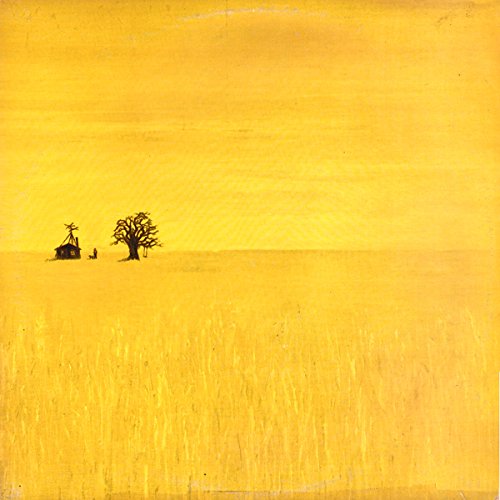
Harmonium was once referred to as the "most important Canadian band ever" by the Toronto Sun. 1975's "Les Cinq Saisons" (or "Si On Avait Besoin d'Une Cinquième Saison," roughly translated as "If We Needed a Fifth Season") merited a mention in Rolling Stone magazine's long overdue list of their top 50 progressive rock albums of all time in 2015 (and they also declared it the best progressive folk album).
The traditional rock band instrumentation notably isn't employed here, as there are plenty of woodwinds and no drums. The music is often playful and whimsical, executed without the slightest sense of inhibition. The album begins with four shorter tracks, one for each season of the year. The summer track "Dixie" has a jazzy ragtime feel to it, and the autumn track "Depuis l'automne" is haunting and pastoral.
But it is the longer fifth track (representing a mythical fifth season) that takes up most of side two and elevates the album from excellent to otherworldly. This track, the mostly instrumental Histoires Sans Paroles (Song Without Words), is one of the most beautiful pieces of music ever committed to tape.
And to much of Quebec, this is their folk music. There are numerous videos of bands covering this piece. Here's a group of high school kids performing it note perfect:


.jpg)